OUR PIPELINE
A Different Kind of Cytokine Therapy
We are building a pipeline of novel immunotherapies that we believe will deliver on the promise of cytokine therapeutics for patients with cancer and autoimmune / inflammatory diseases.

1st line PD-L1 negative NSCLC
Phase 2
Solid tumors
IND Enabling
Autoimmune diseases
Discovery
Pre-clinical
Inflammatory diseases
Discovery
Pre-clinical
Obesity, Inflammatory diseases
Discovery
Pre-clinical
1PCT = Pembrolizumab + Chemotherapy (Pemetrexed + Carboplatin)

Our most advanced product candidate, STK-012, is a modified IL-2 cytokine. IL-2 is a master modulator of the immune system, stimulating cell proliferation, survival and differentiation in a diverse set of immune cells. A recombinant IL-2 therapy, aldesleukin (marketed as Proleukin), is approved for and has compelling efficacy in certain cancers, however it is not widely used because it can only be administered for a short course of therapy due to risk for severe toxicities such as capillary leak syndrome, or CLS.
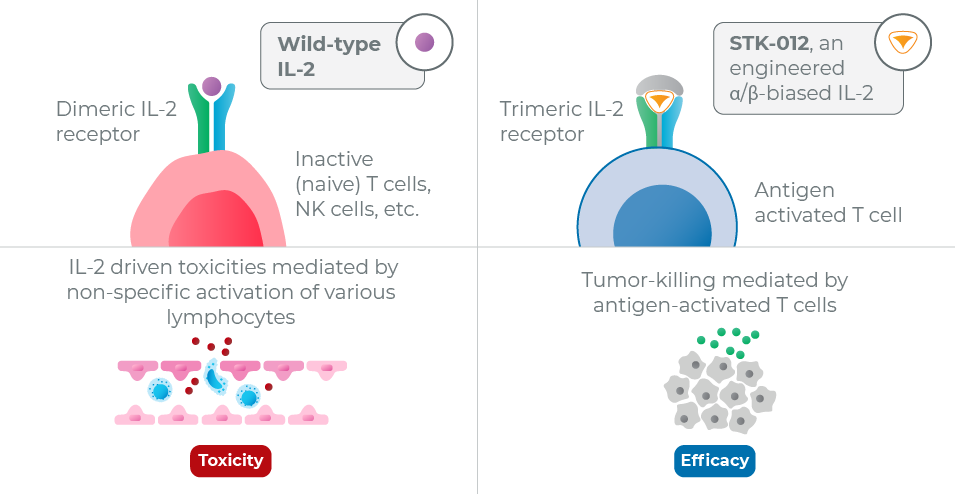
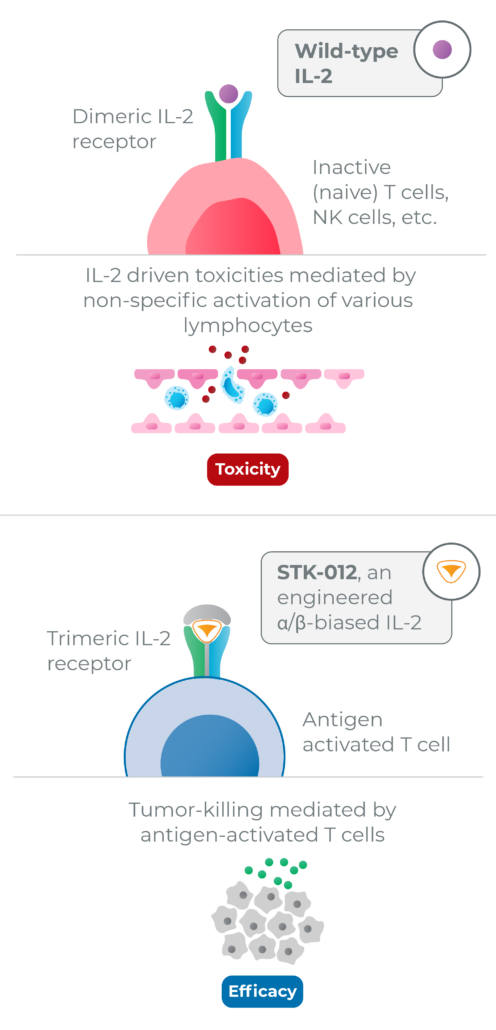
The IL-2 receptor is expressed on the surface of most lymphocytes, in particular T cells, NK cells and B cells, and contains three possible protein chains: (i) IL-2Rα, or CD25; (ii) IL-2Rß, or CD122; and (iii) IL-2Rγ, or CD132. The trimeric, high-affinity IL-2 receptor employs all three of these chains while the dimeric, intermediate-affinity IL-2 receptor employs only the IL-2Rβ and IL-2Rγ chains. Tumor antigen-activated T cells express the trimeric, high-affinity IL-2 receptor at significantly higher concentrations than any other lymphocyte.
We believe the efficacy of IL-2 is primarily driven by the proliferation and activation of tumor antigen-activated T cells, and we have engineered STK-012 to preferentially stimulate these tumor-killing T cells. In contrast, NK cells and naïve T cells do not express IL-2Rα and express only the dimeric, intermediate affinity IL-2 receptor. We and others have demonstrated that IL-2-related toxicities, in particular CLS, are mainly driven by the non-specific activation of various lymphocytes such as NK cells. Therefore, we designed STK-012 as an α/ß-biased IL-2 partial agonist with the following three characteristics:
STK-012 is now being investigated in a global randomized Phase 2 study in combination with pembrolizumab and chemotherapy in first line, PD-L1 negative nonsquamous non-small cell lung cancer (NCT05098132).
STK-009, SYNCAR-001, and SYNCAR-002 are no longer under active development by Synthekine but are available for partnering.
(CD19 orthoCAR-T + orthoIL-2)
CD19+ malignancies
Phase 1
± lymphodepletion
(CD19 orthoCAR-T + orthoIL-2)
Systemic lupus erythematosus (SLE), Systemic sclerosis
Phase 1
no lymphodepletion
(GPC3 orthoCAR-T + orthoIL-2)
Hepatocellular carcinoma
IND Enabling
To engineer our selective cytokine partial agonists, we alter or tune the wild-type cytokine’s receptor-binding surface to enhance binding to receptors on efficacy-driving cell types and simultaneously diminish binding to receptors on toxicity-driving cell types. The result is a modified cytokine, or mutein, that allows for the selective agonism of cytokine signaling on specific cells to maximize efficacy and minimize toxicity.
For example, our data suggests that the efficacy of IL-2 is the result of the proliferation and activation of certain immune cells, namely tumor antigen-activated T cells. Furthermore, our data suggests that the toxicity of IL-2 is primarily driven by non-specific activation of a wide range of lymphocytes, such as NK cells and naïve T cells. To address the therapeutic index challenges of IL-2, we have designed our IL-2 partial agonist, STK-012, to bias its activity towards tumor antigen-activated T cells. STK-012 is in a Phase 1b clinical trial for solid tumors, with a focus on non-small cell lung cancer (NSCLC) and renal cell carcinoma (RCC).
We are also developing partial agonists of other cytokines, such as IL-12 for the treatment of cancer, and IL-22 for the treatment of inflammatory and metabolic diseases.
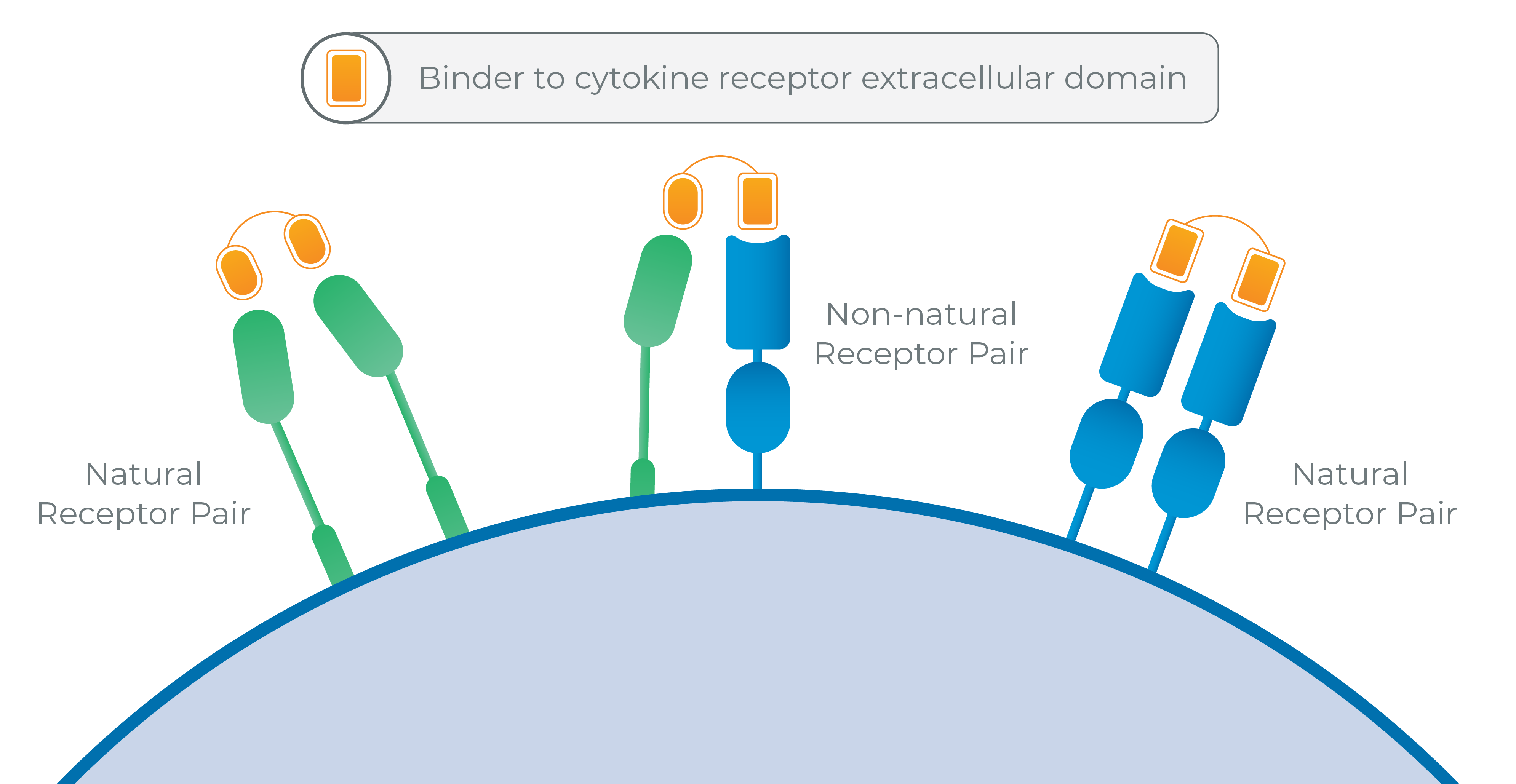
Designing surrogate cytokine agonists represents a novel engineering approach to create a completely new pharmacologic class of cytokine therapeutics. Extracellular receptor dimerization is a fundamental mechanism by which most cytokines initiate signal transduction. Native cytokines bind to the extracellular domain of two or more cell surface cytokine receptor subunits and dimerize or multimerize the receptor to drive signaling within the cell. We have demonstrated that this intracellular signaling can be tuned by altering dimerization proximity or geometry of the cytokine receptor subunits.
Unlike our partial agonist platform, where we employ targeted mutagenesis, our surrogate cytokine agonist platform enables us to dimerize or multimerize receptor subunits in ways wild-type cytokines or mutein-based approaches cannot. This gives our surrogate cytokine agonist platform the potential for an almost unlimited array of biased signaling possibilities, including non-natural pairing of cytokine receptor subunits to create new biology and drive novel cell selectivity and signaling. We have entered into industry collaborations with this technology and are continuing to expand our library of surrogate cytokine receptor binders.
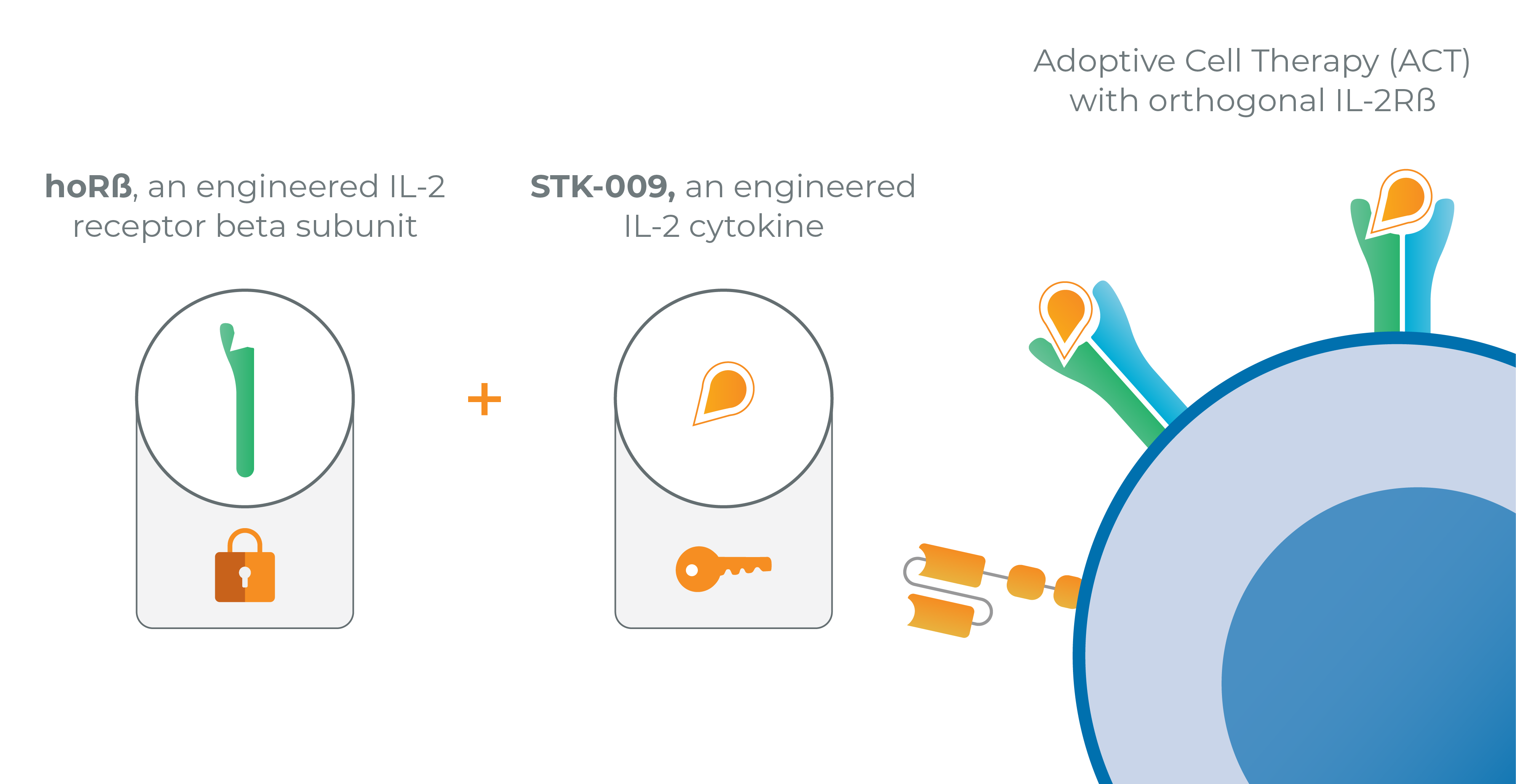
To facilitate selective in vivo activation and expansion of adoptive cell therapies, or ACTs, we have developed a novel orthoIL-2 technology which utilizes an engineered derivative of a naturally occurring cytokine that acts as a highly selective ligand for a complementary, engineered cytokine receptor complex. This orthogonal ligand-receptor pair can be used in a lock-and-key approach, wherein a modified cytokine receptor (the “lock”) is engineered into the ACT to make it inducible by a modified cytokine ligand (the “key”). This approach allows for cytokine-receptor binding completely independent of the endogenous cytokine system, allowing for controlled and enhanced in vivo expansion of cells of interest without toxicities emerging from the uncontrolled expansion of the infused ACT or the indiscriminate activation of the endogenous immune system.
We have designed STK-009, our orthogonal IL-2, to deliver a highly selective proliferation and activation signal in vivo to remove the need for lymphodepletion and increase the durability and potency of ACTs that are engineered to express the orthogonal IL-2 beta receptor (hoRß). Our first application for STK-009 is in combination with SYNCAR-001, an autologous CD19-targeting chimeric antigen receptor T cell (CAR T cell) which expresses hoRß to selectively receive a signal from STK-009. STK-009 + SYNCAR-001 is in a Phase 1 clinical trial for CD19+ tumors and is being prepared to expand into autoimmune diseases as well.
We believe that the orthogonal IL-2 technology can drive deeper and more durable responses with reduced toxicities across various CAR-T targets, such as GPC3 for solid tumor with our STK-009 + SYNCAR-002 program, as well as other cell therapy modalities (e.g., TCR T cells, TILs, Tregs).
With this platform we aim to bias the activity of our cytokines to certain immune cell types to deliver therapeutic specificity. We do that by altering or tuning the wild-type cytokine’s receptor-binding surface to either enhance binding to efficacy-driving immune cell types and diminish binding to toxicity-driving immune cell types.
To engineer our selective cytokine partial agonists, we alter or tune the wild-type cytokine’s receptor-binding surface to enhance binding to receptors on efficacy-driving cell types and simultaneously diminish binding to receptors on toxicity-driving cell types. The result is a modified cytokine, or mutein, that allows for the selective agonism of cytokine signaling on specific cells to maximize efficacy and minimize toxicity.
For example, our data suggests that the efficacy of IL-2 is the result of the proliferation and activation of certain immune cells, namely tumor antigen-activated T cells. Furthermore, our data suggests that the toxicity of IL-2 is primarily driven by non-specific activation of a wide range of lymphocytes, such as NK cells and naïve T cells. To address the therapeutic index challenges of IL-2, we have designed our IL-2 partial agonist, STK-012, to bias its activity towards tumor antigen-activated T cells. STK-012 is in a Phase 1b clinical trial for solid tumors, with a focus on non-small cell lung cancer (NSCLC) and renal cell carcinoma (RCC).
We are also developing partial agonists of other cytokines, such as IL-12 for the treatment of cancer, and IL-22 for the treatment of inflammatory and metabolic diseases.
Our surrogate cytokine agonist platform does not rely on native cytokine structure. Instead, surrogate cytokine agonists are engineered as de novo structures specifically designed to dimerize or multimerize cytokine receptor subunits in ways wild-type cytokines or mutein-based approaches cannot.
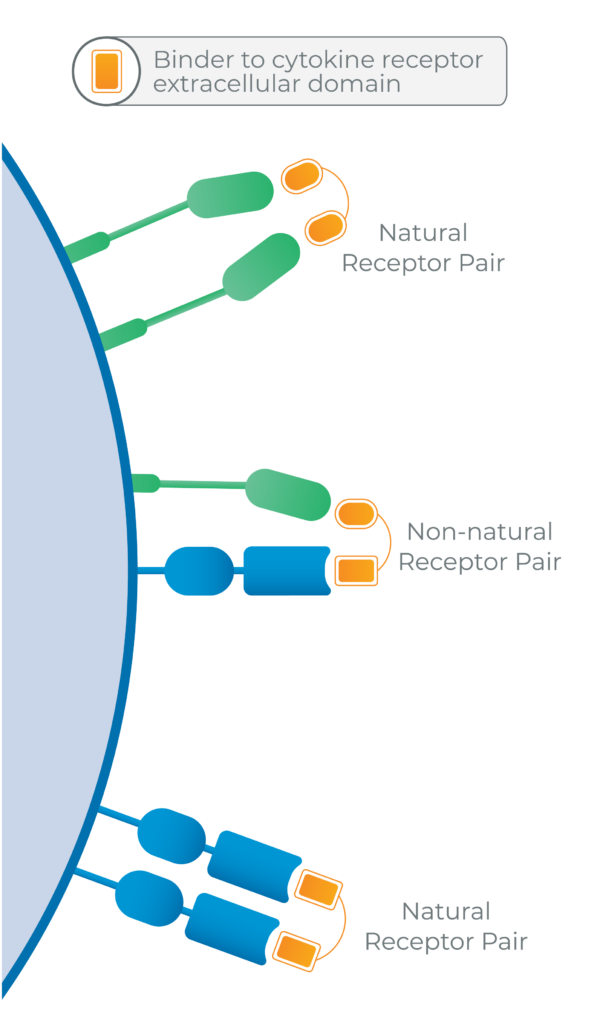
Designing surrogate cytokine agonists represents a novel engineering approach to create a completely new pharmacologic class of cytokine therapeutics. Extracellular receptor dimerization is a fundamental mechanism by which most cytokines initiate signal transduction. Native cytokines bind to the extracellular domain of two or more cell surface cytokine receptor subunits and dimerize or multimerize the receptor to drive signaling within the cell. We have demonstrated that this intracellular signaling can be tuned by altering dimerization proximity or geometry of the cytokine receptor subunits.
Unlike our partial agonist platform, where we employ targeted mutagenesis, our surrogate cytokine agonist platform enables us to dimerize or multimerize receptor subunits in ways wild-type cytokines or mutein-based approaches cannot. This gives our surrogate cytokine agonist platform the potential for an almost unlimited array of biased signaling possibilities, including non-natural pairing of cytokine receptor subunits to create new biology and drive novel cell selectivity and signaling. We have entered into industry collaborations with this technology and are continuing to expand our library of surrogate cytokine receptor binders.
Our novel cytokine-inducible cell therapy platform utilizes the orthoIL-2 technology, comprised of engineered derivatives of IL-2 and one of its receptors to create a cytokine-receptor signaling system that is orthogonal to naturally occurring IL-2 signaling. The orthoIL-2 technology is employed to selectively activate and expand adoptive cell therapies (ACTs) in vivo in order to address key limitations of this class of treatment.
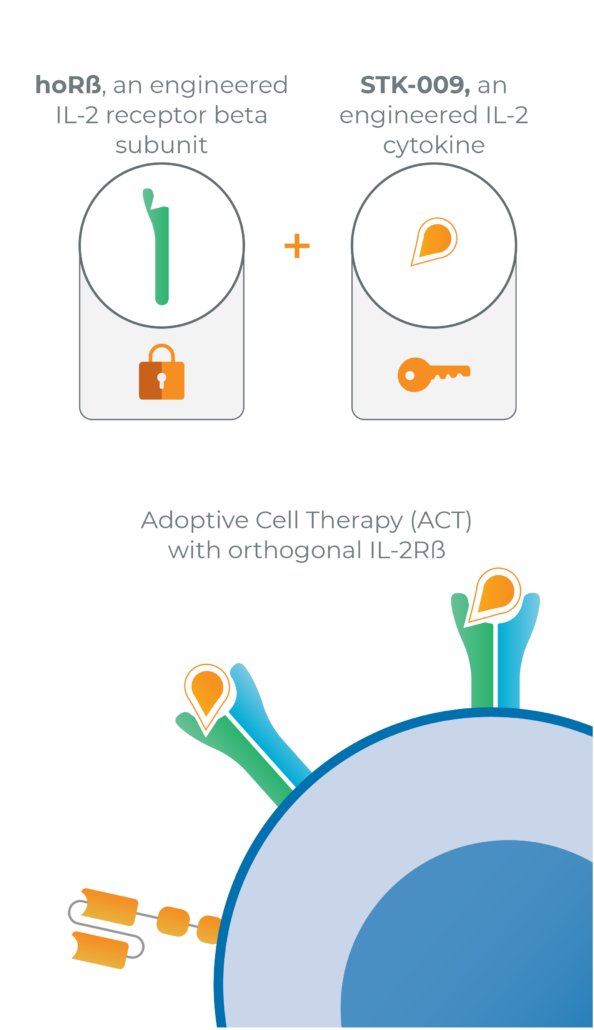
To facilitate selective in vivo activation and expansion of adoptive cell therapies, or ACTs, we have developed a novel orthoIL-2 technology which utilizes an engineered derivative of a naturally occurring cytokine that acts as a highly selective ligand for a complementary, engineered cytokine receptor complex. This orthogonal ligand-receptor pair can be used in a lock-and-key approach, wherein a modified cytokine receptor (the “lock”) is engineered into the ACT to make it inducible by a modified cytokine ligand (the “key”). This approach allows for cytokine-receptor binding completely independent of the endogenous cytokine system, allowing for controlled and enhanced in vivo expansion of cells of interest without toxicities emerging from the uncontrolled expansion of the infused ACT or the indiscriminate activation of the endogenous immune system.
We have designed STK-009, our orthogonal IL-2, to deliver a highly selective proliferation and activation signal in vivo to remove the need for lymphodepletion and increase the durability and potency of ACTs that are engineered to express the orthogonal IL-2 beta receptor (hoRß). Our first application for STK-009 is in combination with SYNCAR-001, an autologous CD19-targeting chimeric antigen receptor T cell (CAR T cell) which expresses hoRß to selectively receive a signal from STK-009. STK-009 + SYNCAR-001 is in a Phase 1 clinical trial for CD19+ tumors and is being prepared to expand into autoimmune diseases as well.
We believe that the orthogonal IL-2 technology can drive deeper and more durable responses with reduced toxicities across various CAR-T targets, such as GPC3 for solid tumor with our STK-009 + SYNCAR-002 program, as well as other cell therapy modalities (e.g., TCR T cells, TILs, Tregs).